When I started seriously looking at new construction in Chicago about four years ago, my smart home checklist was embarrassingly short. I wanted fast WiFi and a thermostat I could control from my phone. That was basically it. I had a Nest at my rental and thought that was the ceiling of what “smart” meant in residential real estate.
I know considerably more now, and I want to share what I wish someone had told me when I started. Not because the technology is complicated — it isn’t — but because the gap between what “smart home” means in a marketing brochure versus what it means in actual built infrastructure is significant, and it affects both your daily life and the long-term value of your purchase.
The First Time I Saw a Real Smart Home Infrastructure
I was touring a unit at a development in the West Loop. The sales rep walked me through the standard features and I nodded along, half-listening, expecting the usual Nest-and-Ring pitch. Then she pulled out a diagram of the low-voltage wiring plan — a literal schematic showing every network drop, every sensor location, every speaker pre-wire, the panel layout — and I realized this was a completely different category of product.
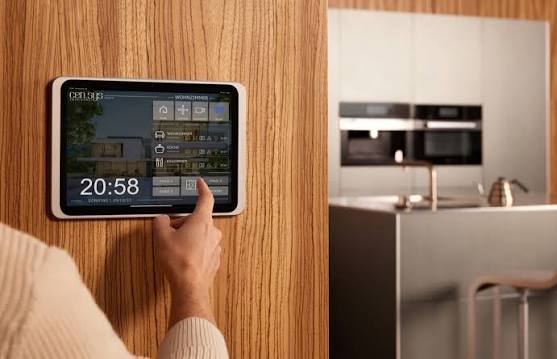
The home was designed to be integrated at the infrastructure level, not the device level. The difference is meaningful. Device-level smart homes — a Nest here, a Ring there, some Philips Hue bulbs — require you to manage multiple apps, multiple ecosystems, and multiple manufacturer relationships. When something doesn’t work together, it’s your problem to sort out. Infrastructure-level smart homes have everything on one system, designed to work together because it was wired to work together before the drywall went up.
What Changed in My Criteria
After seeing that, I started asking different questions on every tour. Not “does it have smart features?” — which everyone says yes to — but “what’s the low-voltage wiring plan?” and “what’s the hub system?” and “is the electrical panel sized for EV charging and battery backup?”
I also started paying attention to smart home features as infrastructure in the same way I’d pay attention to HVAC or plumbing. If a home needs a smart home retrofit post-construction, that retrofit costs more, looks worse, and delivers less than what gets built in during construction. Pre-run speaker wire in the ceiling is invisible and costs maybe $200 during construction. Running it after drywall requires cutting, patching, painting, and typically costs $800–$1,500 per room.
The Honest Caveat About Smart Home Features
Not everything marketed as a smart feature is worth the same. Some things — whole-home automation systems, pre-run low-voltage wiring, solar-ready roof infrastructure, EV-capable electrical panels — are genuine infrastructure investments that add real value and flexibility. Others — a branded smart thermostat, a video doorbell, a smart lock — are quality-of-life improvements but not transformative.
When I look at a community’s smart home package now, I’m primarily looking at the infrastructure items: the wiring plan, the panel spec, the hub system, the solar and EV readiness. The devices matter, but they’re replaceable. The infrastructure is what you’re really buying.
What I Actually Use Every Day
Two years into living with a properly integrated smart home system: the things I use constantly are the things I didn’t know I’d care about. The whole-home scenes (one tap that turns off all the lights, locks the door, sets the thermostat to away mode, and arms the security system when I leave). The energy monitoring dashboard that told me my old refrigerator was using 40% more electricity than it should have. The automatic lighting adjustment that shifts from daylight temperature during the workday to warm white at 7pm without me touching anything.
The Ring doorbell — which I thought was the headline feature when I first started paying attention — barely registers at this point. It’s useful. The integrated system is what changed how I live in the space.